


Chaos Engineering Guide: How to Build Resilient Systems on Purpose
1. What Is Chaos Engineering?
2. Core Principles of Chaos Engineering
3. How to Run a Chaos Engineering Experiment: Step by Step
4. Leading Chaos Engineering Tools
5. Security Chaos Engineering: Extending the Discipline
6. AI-Driven Chaos Experiments: Where the Practice Is Heading
7. Common Misconceptions About Chaos Engineering
8. Getting Started: A Practical First Step
9. Building Resilient Systems with Chaos Engineering
What Is Chaos Engineering?
Core Principles of Chaos Engineering
1. Define a Steady-State Hypothesis
2. Formulate a Specific, Testable Hypothesis
3. Replicate Real-World Conditions
4. Minimize Blast Radius
5. Automate and Run Continuously
How to Run a Chaos Engineering Experiment: Step by Step
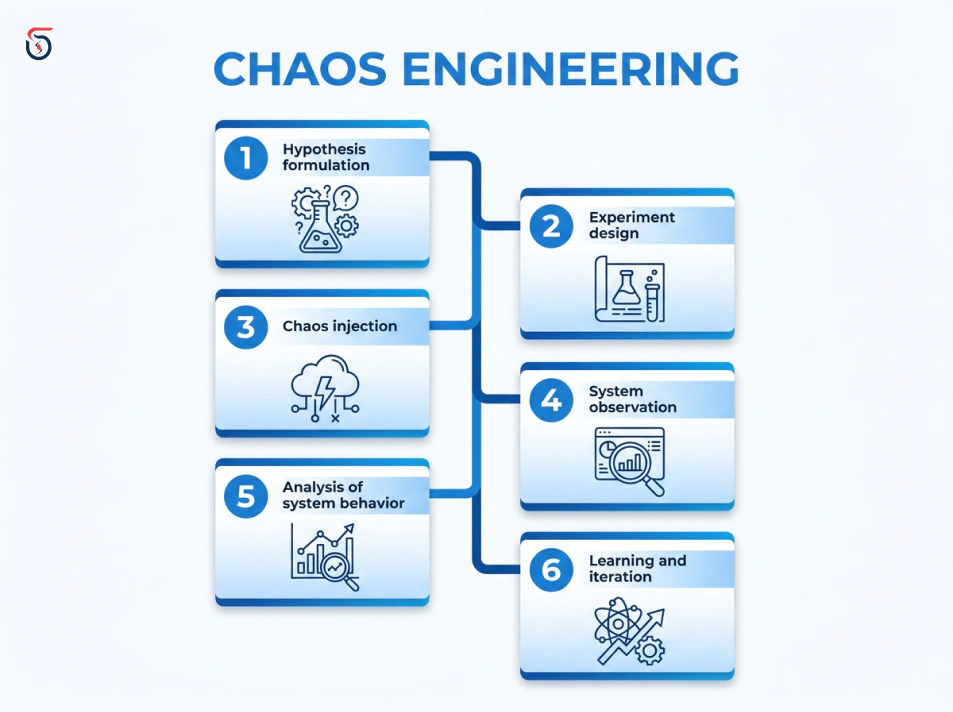
- ◆Establish your steady state using real metrics, error rate, latency, throughput, over a representative time window.
- ◆Form a specific hypothesis about what should happen if a particular component fails.
- ◆Design the experiment, choosing the smallest blast radius that can still meaningfully test the hypothesis.
- ◆Inject the failure: terminate an instance, add network latency, exhaust a resource, using a chaos engineering tool rather than manual intervention.
- ◆Observe system behavior in real time using your monitoring and observability stack.
- ◆Analyze the result. Did the system behave as hypothesized? If yes, you've gained confidence. If not, you've found a real weakness before a customer did.
- ◆Remediate and document. Fix the gap, update runbooks, and feed the finding back into the next round of experiments.
Leading Chaos Engineering Tools
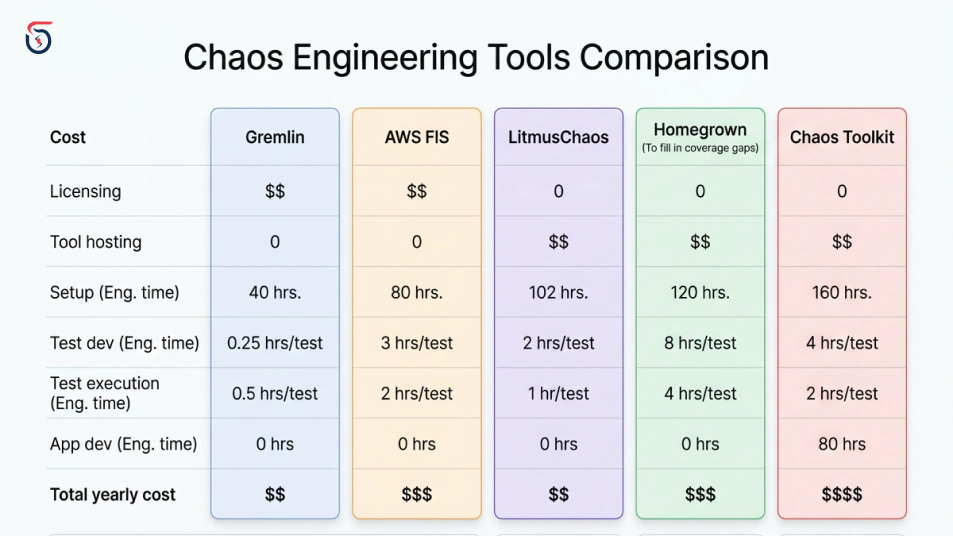
- ◆Chaos Monkey: The original tool, developed by Netflix, which randomly terminates instances to test resilience to instance failure. Still widely referenced as the origin point of the discipline.
- ◆Gremlin: A commercial platform offering a broad range of failure types (CPU spikes, network partitioning, latency) with strong blast-radius controls and an accessible interface for teams new to the practice.
- ◆LitmusChaos: An open-source, Kubernetes-native framework with a large library of pre-built, declarative chaos experiments and built-in chaos observability through Prometheus metrics.
- ◆AWS Fault Injection Simulator: A managed service for running controlled, multi-region fault injection experiments natively within AWS infrastructure, with IAM-based permission controls.
- ◆Chaos Toolkit: An open-source, extensible framework that defines experiments as JSON/YAML, supporting a "chaos as code" approach that fits naturally into CI/CD pipelines.
- ◆Steadybit: A platform with a strong emphasis on continuous validation, designed to surface reliability risks earlier in the development lifecycle rather than only in mature production environments.
Security Chaos Engineering: Extending the Discipline
AI-Driven Chaos Experiments: Where the Practice Is Heading
- ◆Predictive failure modeling. AI analyzing system telemetry, dependency graphs, and historical incident data to predict which failure scenarios are most likely to matter, helping teams prioritize experiments that target genuine risk rather than guessing.
- ◆Automated experiment design. Machine learning suggesting specific chaos scenarios based on observed architecture and traffic patterns, reducing the manual effort of designing every experiment from scratch.
- ◆Faster anomaly detection during experiments. AI-assisted monitoring spotting subtle behavioral deviations during a chaos run that a human reviewing dashboards might miss, especially in systems with dozens of interacting services.
Common Misconceptions About Chaos Engineering
- ◆"It's reckless." In practice, it's the opposite, a disciplined, hypothesis-driven approach with explicit safety controls, scoped blast radius, and rollback mechanisms built in from the start.
- ◆"Only large companies need it." Even small, early-stage systems experience downtime. Starting with low-risk experiments in staging is just as valuable for a small team validating its first few critical user journeys.
- ◆"It causes more harm than good." This only holds true when chaos experiments are run without proper scoping, observability, or recovery protocols. Done correctly, the entire point is to reduce the odds of real harm later.
- ◆"You need production traffic from day one." Most mature chaos practices start in non-production or controlled environments and expand toward production scope only as confidence and tooling mature.
Getting Started: A Practical First Step
- ◆Pick one non-critical service with a clear, measurable steady state.
- ◆Form one specific, falsifiable hypothesis about a single failure mode.
- ◆Run the experiment in staging first, with full observability in place.
- ◆Document the result, fix what you find, and only then consider expanding scope, toward production, toward a wider blast radius, or toward a second service.

Never Miss an Update
Add SoftSages Technology as a Preferred Source on Google for more of our latest tech content in AI Mode and AI Overviews.
Building Resilient Systems with Chaos Engineering
Confident your systems can handle a real failure, or just hoping they can? SoftSages helps businesses design and implement chaos engineering practices that build genuine resilience, from steady-state baselining and tool selection to Security Chaos Engineering and continuous, automated experiment design. 👉 Talk to a Cloud Services Expert and get a clear, no-pressure assessment of how resilient your systems actually are.
Table of contents
What Is Chaos Engineering?
Core Principles of Chaos Engineering
How to Run a Chaos Engineering Experiment: Step by Step
Leading Chaos Engineering Tools
Security Chaos Engineering: Extending the Discipline
AI-Driven Chaos Experiments: Where the Practice Is Heading
Common Misconceptions About Chaos Engineering
Getting Started: A Practical First Step
Building Resilient Systems with Chaos Engineering
Join Our Newsletter
Get the latest tech trends, tutorials and expert analysis delivered straight to your inbox.
FAQs about Chaos Engineering
Chaos engineering is the practice of deliberately introducing controlled failures into a system to observe how it responds, helping teams uncover weaknesses before they cause real outages.
The steady-state hypothesis is a clear, measurable definition of normal system behavior, like response time or error rate, established before running an experiment so results can be properly evaluated.
Yes, when done correctly. Mature chaos practices scope experiments with a controlled blast radius, strong observability, and rollback mechanisms, and typically start in staging before expanding toward production.
Popular tools include Chaos Monkey, Gremlin, LitmusChaos, AWS Fault Injection Simulator, Chaos Toolkit, and Steadybit, each suited to different environments like Kubernetes, AWS, or general cloud-native infrastructure.
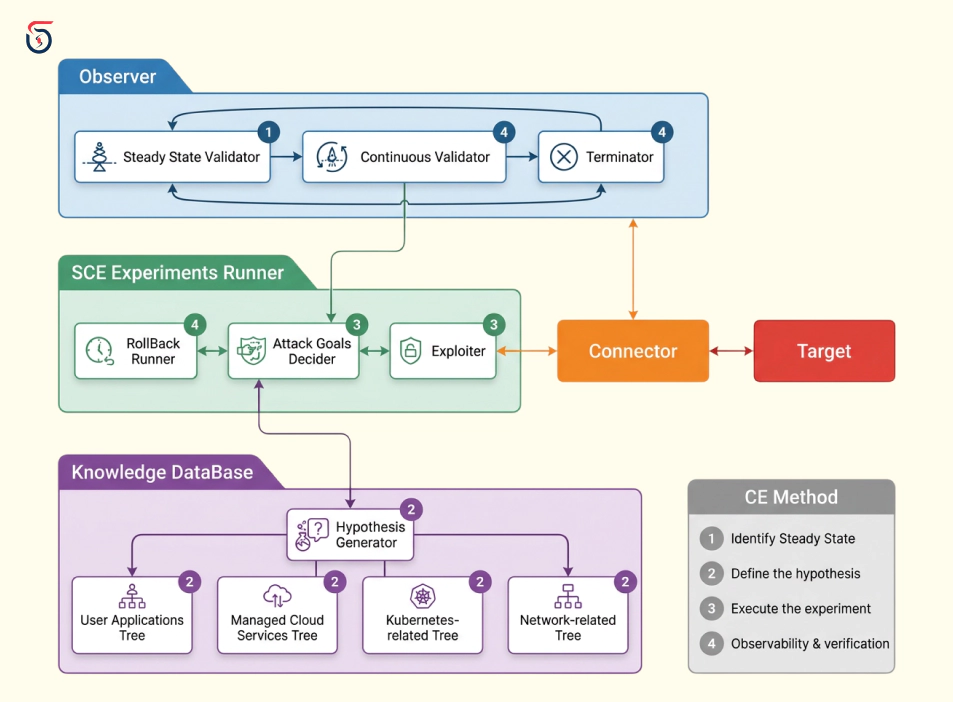
Security Chaos Engineering applies chaos engineering principles to security resilience, running controlled experiments like simulated credential compromise to test how quickly threats are detected and contained, rather than testing only infrastructure failures.
AI is increasingly used to predict likely failure scenarios from system telemetry, automatically suggest experiment designs, and detect subtle anomalies during experiments faster than manual monitoring alone.
Yes. Even small systems experience downtime, and starting with low-risk experiments in staging helps validate critical user journeys early, before complexity and stakes grow.
Blast radius refers to the scope of a chaos experiment's potential impact. Minimizing blast radius, testing a small percentage of traffic or a non-critical service first, is a core safety principle of the practice.
Traditional testing typically validates expected behavior in controlled, often non-production environments. Chaos engineering specifically targets unexpected failure conditions, often in or near production, to validate real-world resilience that standard tests don't cover.
Start small: choose one non-critical service with a clear steady state, form a single specific hypothesis, and run the experiment in staging with full observability before expanding scope.